Nebraska Supreme Court rules on case involving AI use in court brief
Attorney who submitted ‘hallucinated’ information in court brief referred to Counsel for Discipline
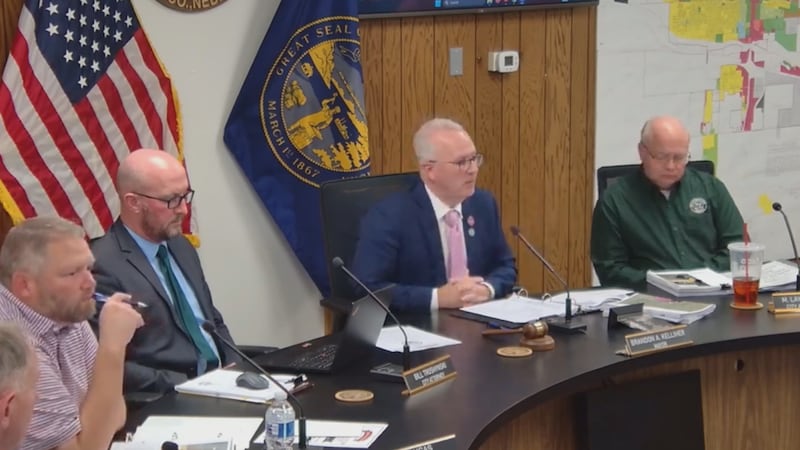
LINCOLN, Neb. (WOWT) - The state’s highest court is referring an Omaha divorce attorney for discipline after filings in a divorce case were found to be fictitious.
The matter before the Nebraska Supreme Court stemmed from divorce proceedings that had been brewing since 2013 and had gone to trial in 2025.
At issue during the course of the trial: pinpointing the effective date for dividing the assets and custody of a minor child — which ultimately led to a filing that contained 20 reference “hallucinations,” including fictitious details from real Nebraska court cases and references to four completely made up cases. In February’s hearing before the Nebraska Supreme Court, the opposing attorney said that of the 63 references Omaha attorney Greg Lake made in his brief, 57 contained some form of defect.
Lake wanted to replace the original brief; the opposing side wanted it striken and the appeal dismissed entirely.
“This matter presents a novel issue for Nebraska courts: the use of fictitious, potentially AI-generated cases, holdings, and quotations,” the opinion states. “... The use of generative AI has been growing over the past few years and, if used with ‘caution and humility,’ can provide benefits to professionals who use it.”
According to the opinion filed Friday, the court also sided with the mother, affirming the decree of dissolution of the marriage and noting that the decision left the door open for the mother to file for the recovery of her attorney fees.
Fateful appeal
In the divorce decree, the couple was granted joint legal custody and ordered to split expenses related to the child; the mother was granted sole physical custody, subject to the father’s parenting time; and the father was ordered to pay child support.
The father’s attorney, Lake, filed an appeal, and the mother’s attorney filed a cross-appeal. That’s when things went astray.
The day after filing his appellate brief, Lake submitted a replacement brief, stating that he had included a required section that was missing from the original version, but had made no other changes to the document.
However, the filing included fictitious references from multiple Nebraska court cases, Nebraska statutes, and Supreme Court rules.
One of the court cases referenced was “Kennedy v. Kennedy,” which was decided by the Nebraska Court of Appeals in an unpublished memo in 2019.
“The only real ‘Kennedy v. Kennedy’ case decided by a Nebraska appellate court in 2019 does not discuss parenting time, and it does not mention the need for specific findings,” the court opinion states.
The attorney’s brief also included a quote from the case that didn’t exist, “nor does it appear to exist anywhere in Nebraska case law.” That quote was supposed to bolster the contention that the law favors joint custody, “when, in reality, Nebraska law does not favor or disfavor any particular custody arrangement and requires custody determinations to be made based on the best interests of the child.”
Similar occurrences happened in citations for “Simons v. Simons,” another Nebraska case from 2022, which were used to argue in favor of reversing a denial of attorney fees in the event of bad-faith litigation tactics.
According to the court: “‘Simons v. Simons’ does not support this proposition or address the denial of attorney fees. The only mention of attorney fees in Simons is in the standard of review in a section discussing alimony.”
Excuses fall short
The Nebraska Supreme Court also stated that it wasn’t sure whether Lake had “knowingly” made the false statements of law.
“(Lake) made numerous false statements of law throughout the brief. Exercising due diligence — a simple search of Westlaw and LexisNexis legal databases, the Nebraska Revised Statutes, Nebraska Supreme Court rules, or the free Nebraska Appellate Courts Online Library — would have made clear to Jason’s counsel that any number of the fictitious quotations, from cases and statutes alike, did not exist, that the ‘Kennedy v. Kennedy’ case relied upon is not a real case, and that the purported holdings of the real cases cited did not match the actual holdings of those cases," Friday’s filing states.
During oral arguments in February, Lake said he had attempted to file a corrected version of the replacement brief; but according to the court, “there is no record of any such filing.” Lake told the justices that his computer had broken during a 10th anniversary trip and he uploaded the wrong version of the brief.
But according to the opinion released Friday, Lake made no prior attempt to address any “questionable contents of his brief” until the mother’s attorney filed a motion to strike the brief and dismiss the father’s appeal, noting the appellate brief “contained many fictitious citations, citations to real cases with incorrect holdings, and nonexistent quotations,” highlighting fake or incorrect citations in several instances in the filing.
In a response filing, Lake said the citations in the original brief were “sloppy” due to “copying and pasting” without verifying the source material. He said that an extension on the filing wasn’t granted until the due date, which was the same day his computer suffered a “catastrophic screen crack” while he was on vacation, leaving him without a computer for five days. He also applied for an extension after the case was moved to the state Supreme Court docket but “his motion was overruled for failure to show exceptional cause” — and still filed his reply brief late, prompting the court to strike it from the record.
During the course of the case, the Nebraska Attorney General did submit a “friend-of-the-court brief,” also known as an amicus brief, as a reminder to the justices that AI plays a central role for making the job of an attorney more efficient and that Nebraska rules already say that if you use AI, the attorney has a duty to verify the accuracy of court briefs.
Still, in Friday’s opinion, the justices urged diligence, insisting court documents be verified ahead of filing.
“We caution attorneys and self-represented litigants alike to take care to verify the truth and accuracy of their filings. Whether using AI or not, the obligations of candor, competency, diligence, and making good faith arguments remain the same. AI, like other technological tools, can be a benefit to the legal community, but it must be used with caution and humility. Anything less imperils the reputation of the legal profession and wastes time and resources of both the courts and litigants.”
Legal clarification
Justice Stephanie Stacy also noted in a concurring opinion that she believed it would have been more accurate to affirm the district court’s decision rather than to deny the appeal, even though the practical outcome was the same.
“Once we struck the appellant’s brief as a sanction, we undoubtedly had the authority, under both our inherent power and the appellate court rules, to dismiss this appeal without conducting any review at all. But since we exercised our discretion to examine the record for plain error and found none, we necessarily engaged in appellate review,” she said in Friday’s filing.
‘Problematic citations’
Friday’s filing includes a chart detailing several problematic citations contained in Lake’s brief:
Citation: Kennedy v. Kennedy, 27 - Neb. App. 510, 934 N.W.2d 57 (2019)
- Court review: fictitious case using real case name from unpublished memorandum opinion; cited and quoted five times throughout brief; quotes and holding do not exist in the real unpublished memorandum opinion or other Nebraska case law
State on behalf of Maddox S. v. Matthew E., 23 Neb. App. 500, 874 N.W.2d 211 (2016)
- Court review: incorrect citation; does not support cited proposition; fictitious quotations
Neb. Rev. Stat. § 43-2923
- Court review: real statute; fictitious quotations and misleading application throughout brief
Schrag v. Spear, 312 Neb. 88, 978 N.W.2d 591 (2022)
- Court review: incorrect citation; fictitious quotations
Neb. Ct. R. § 4-204
- Court review: real court rule; fictitious quotation
Hotz v. Hotz, 301 Neb. 102, 917 N.W.2d 467 (2018)
- Court review: real case; fictitious quotations and holding throughout brief
State ex rel. A.E. v. Buckhalter, 273 Neb. 443, 730 N.W.2d 340 (2007)
- Court review: real case; does not stand for proposition cited to support
Schuman v. Schuman, 27 Neb. App. 1004, 939 N.W.2d 374 (2020)
- Court review: incorrect citation
Neb. Ct. R. § 4-215
- Court review: real court rule; fictitious quotation
Miller v. Miller, 227 Neb. 71, 416 N.W.2d 358 (1987)
- Court review: fictitious case; fictitious quotation
Crawford v. Crawford, 263 Neb. 37, 637 N.W.2d 505 (2002)
- Court review: incorrect citation; fictitious quotation
Brown v. Brown, 260 Neb. 954, 620 N.W.2d 82 (2000)
- Court review: incorrect citation; does not support cited proposition
State on behalf of Ricardo P. v. Christina R., 309 Neb. 705, 962 N.W.2d 315 (2021)
- Court review: fictitious case
Bergmeier v. Bergmeier, 296 Neb. 440, 894 N.W.2d 266 (2017)
- Court review: real case; fictitious quotations and holding throughout brief
Simons v. Simons, 312 Neb. 136, 978 N.W.2d 121 (2022)
- Court review: real case; fictitious quotations and holding throughout brief
Parde v. Parde, 258 Neb. 101, 602 N.W.2d 657 (1999)
- Court review: real case; fictitious quotations and holding throughout brief
Garza v. Garza, 288 Neb. 213, 846 N.W.2d 626 (2014)
- Court review: real case; fictitious quotation and holding
Heald v. Heald, 259 Neb. 604, 611 N.W.2d 598 (2000)
- Court review: real case; does not support cited proposition
Walker v. Walker, 9 Neb. App. 834, 621 N.W.2d 535 (2001)
- Court review: incorrect citation; fictitious quotation
State v. Stricklin, 29 Neb. App. 367, 904 N.W.2d 535 (2017)
- Court review: fictitious case; fictitious quotation
Read the court opinion
—
Watch breaking news unfold on our livestream. Download the First Alert 6 streaming app to your TV or find us in your favorite streaming platform.
Copyright 2026 WOWT. All rights reserved.